HECA Lab @UVic
Historical Ecology & Coastal Archaeology Lab, University of Victoria
Teaching
Upcoming (Spring 2026)
ANTH 241: Archaeology of Animals (New Course)
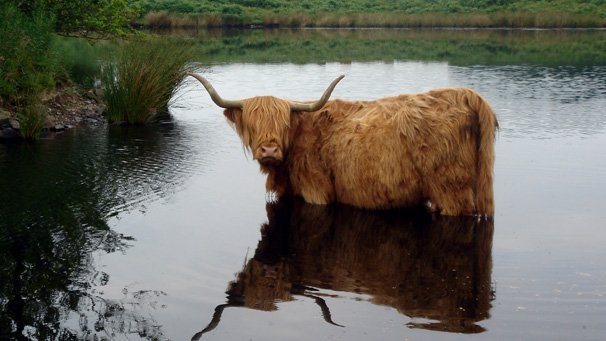
This course explores the wild and domesticated worlds of human-animal relationships over the past 40,000 years. Through global archaeological case studies, we will examine how these connections have transformed culture, landscapes, environments, and human foodways. We will dip our toes into archaeological theories of domestication, the role of animals in religious beliefs, and explore zooarchaeological data. Activities will include lab visits, lectures, class discussions, and videos. Prepare to explore the world history of animals from the perspective of an archaeologist!
ANTH 551 (Research Seminar in Evolution & Ecology)
This combined undergraduate and graduate seminar explores formative theories in the of biological anthropology and archaeology as part of the department’s cross-cutting research theme in evolution & ecology. The course traces conceptual foundations established during the Victorian era that persist, highlighting ongoing tensions, paradigms, critiques, and analytical frameworks. Topics include anthropological scholarship on adaptation, racism, gender, coloniality, biological plasticity, cultural evolution, cultural ecology, historical ecology, niche construction, cognition, global environmental change, and conservation biology among others.
Fall 2025
ANTH 340: Archaeology of British Columbia
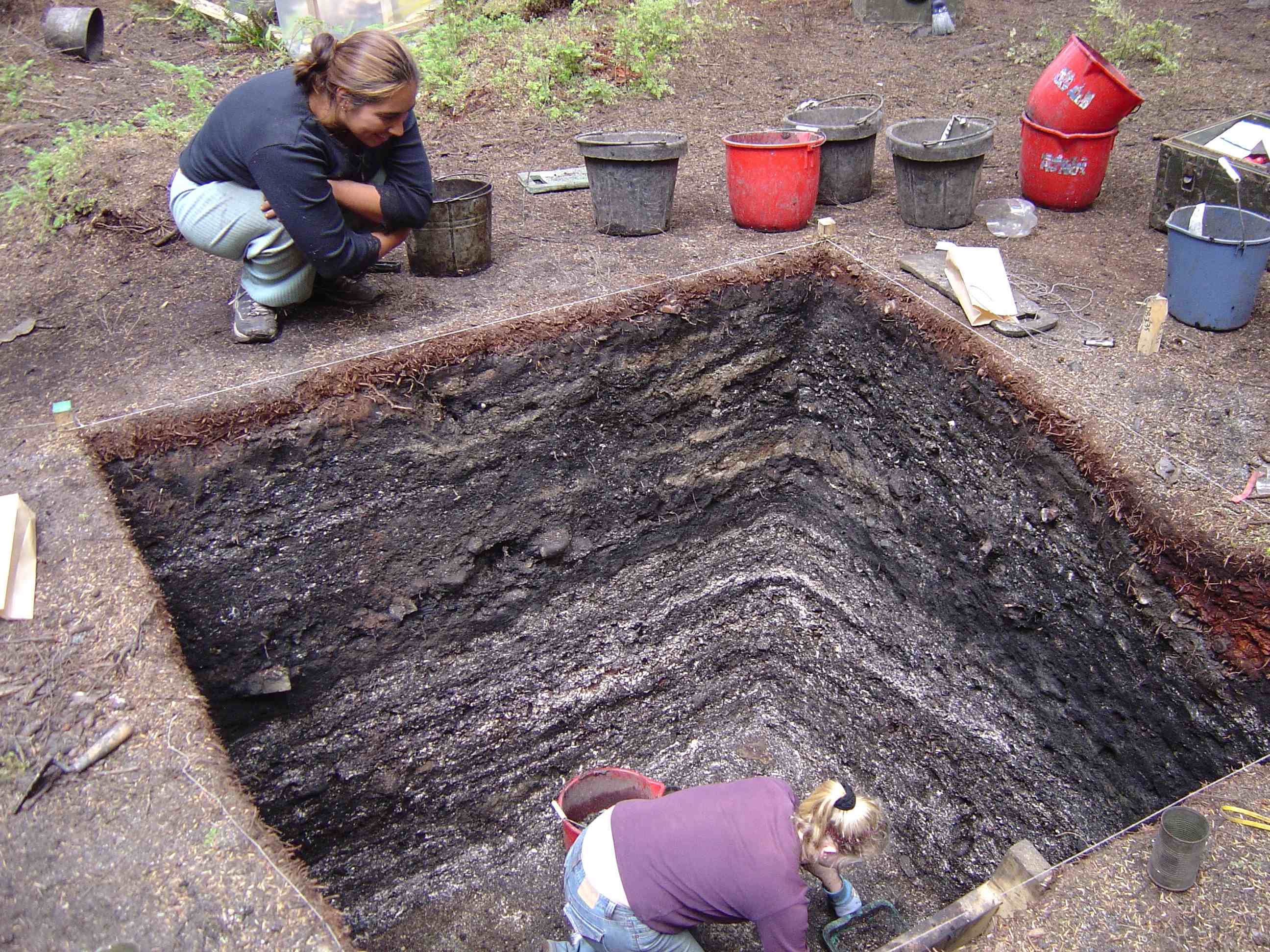
This course surveys the vast and vibrant human history in British Columbia represented at Indigenous and historic-era archaeological sites. It highlights recent research on the coast, plateau and subarctic, considering the many ways Indigenous peoples thrived in diverse places and communities, from the last glaciation into the current moment. We will specifically examine how archaeological research has been conducted in the province by investigating foodways, settlement practices, as well as environmental and sea level changes.
ANTH 240 Archaeology
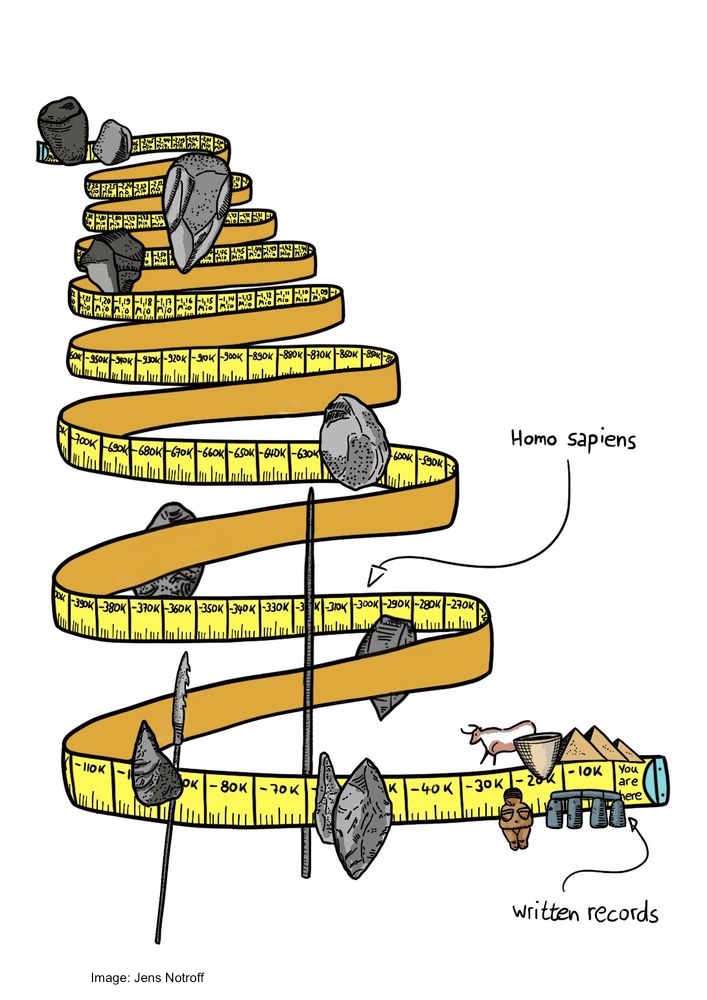

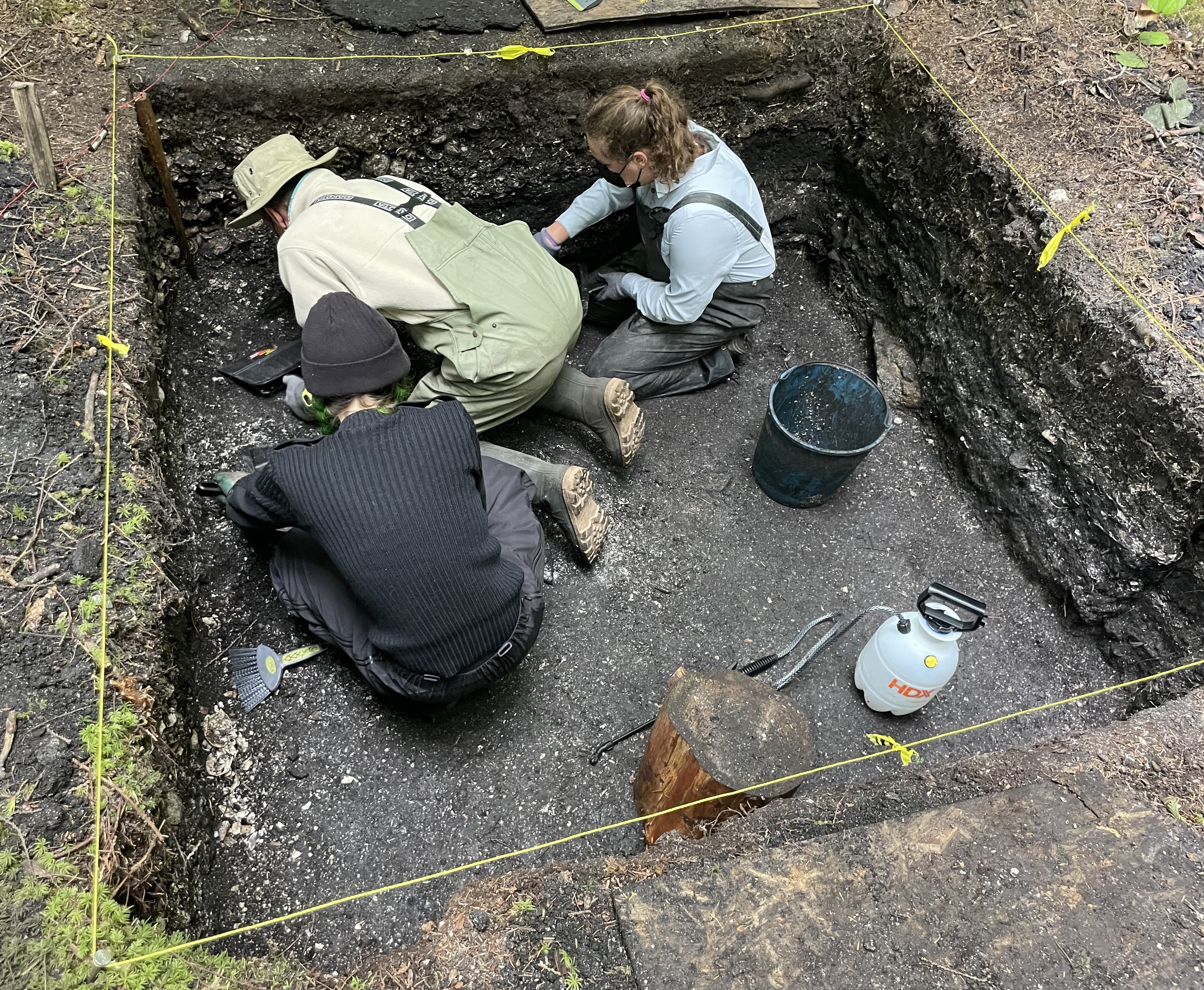
This course introduces the sub-discipline of archaeology, highlighting a few of the many places, theories, methods, techniques, and people(s) who have illuminated our shared human history. We consider the kind of questions archaeologists ask, how the archaeological record is formed, how archeologists collect data, conduct analyses, and interpret their findings. The course is not a comprehensive review but aims to examine the processes through which human history is encountered, narrated, and mobilized in the present. The laboratory sessions provide hands-on experience with techniques discussed in lectures and in the textbook. Please ensure that you have registered for both the lecture and a lab section.
Past courses
ANTH 442: Marine Historical Ecology
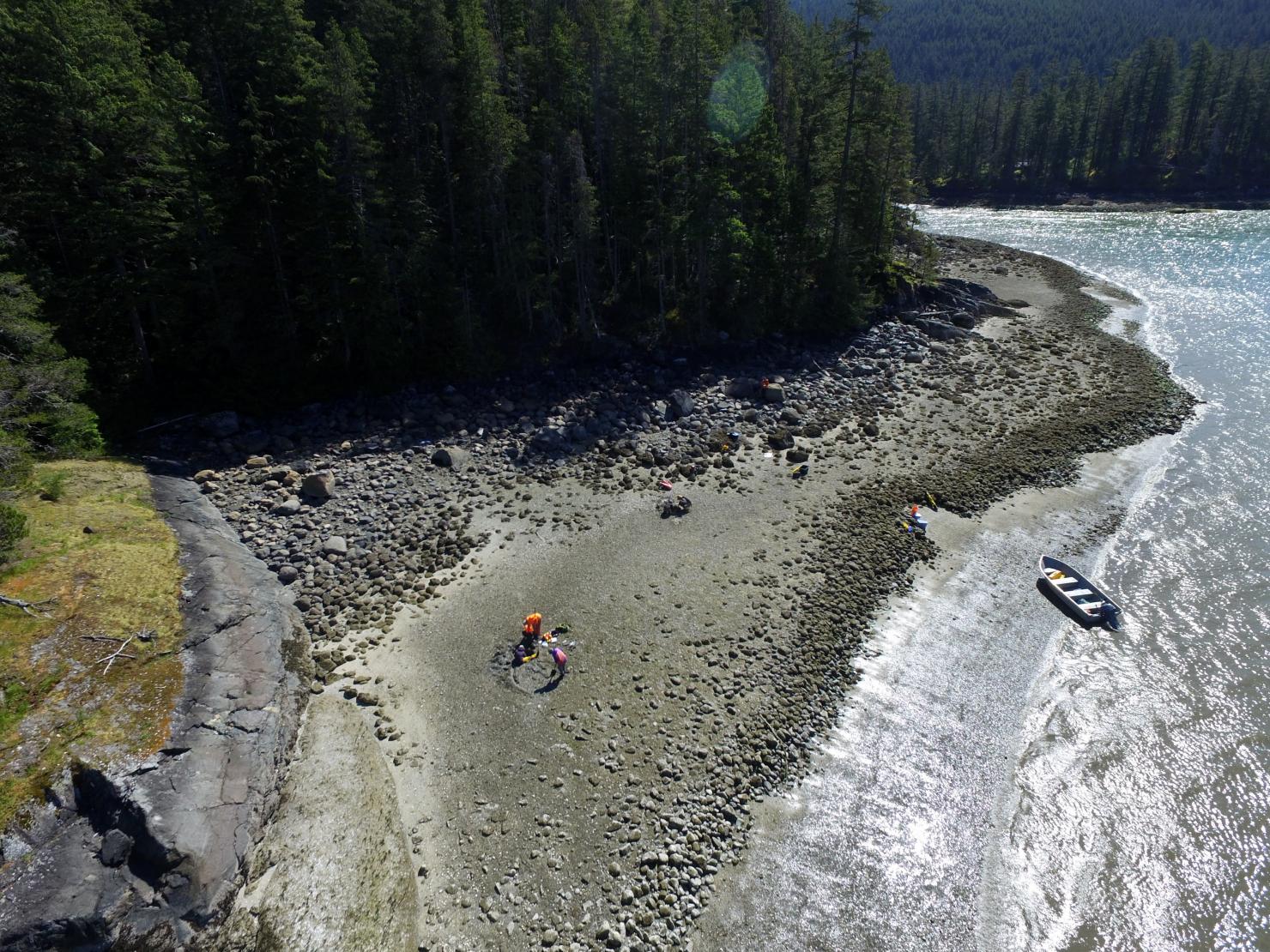
This course explores how coastal archaeological data is increasingly being used to extend contemporary ecological observations of the marine environment within the interdisciplinary framework of historical ecology. We consider anthropological theory and biological datasets by reading and discussing case studies from the worlds’ oceans, coastlines, and information in museums and archives. As this is a 4th-year seminar, students are expected to participate and be prepared to work with datasets, and undertake quantitative analyses as part of group and individual research projects. Working together, we aim to expand the analytical potential of ecological data obtained from coastal archaeological sites and refine understanding of global environmental change via archaeological methods
ANTH 343 & ANTH 344: UVic Archaeology field school in Barkley Sound
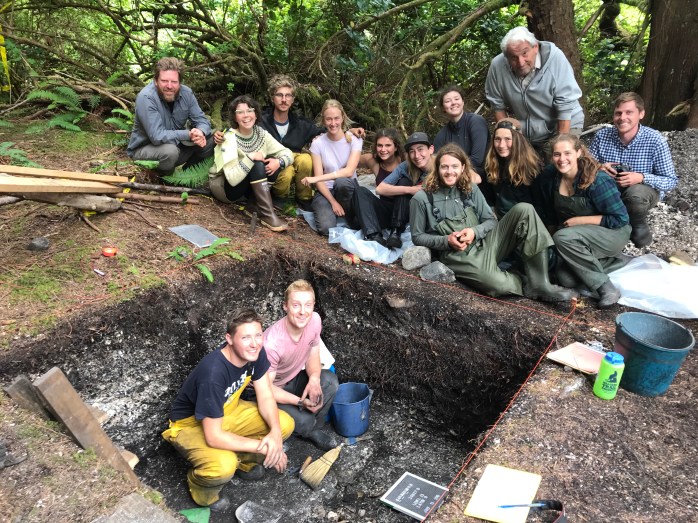
The UVic Department of Anthropology supported an archaeology field school in partnership with Tseshaht First Nation and Pacific Rim National Park Reserve between 2106 and 2022. The field school was run as two separate but sequential field courses (ANTH 343 & 344). The first few days were based in Victoria followed by two and a half weeks of remote camp-based fieldwork in the Broken Group Islands in Pacific Rim National Park Reserve. The second half of the course was hosted at the Bamfield Marine Sciences Centre which is a UVic supported marine research station in Huu-ay-aht First Nation territories in Barkley Sound. In this section of the course, we conducted laboratory analyses and prepared written research reports on recovered archaeological material. This course involved hiking, camping, and boat travel and required full days and dedicated teamwork. For more info on this course, please visit the COURSE BLOG
ANTH 360: Zooarchaeology

This course surveys the methodological practice of zooarchaeology. Through lectures and labs, we consider how human-animal relationships are represented and interpreted in the archaeological record. While zooarchaeology was initially considered a sub-disciplinary specialty at the margins of archaeology, it is an increasingly central focus for archaeological research globally. This course tracks this historical and methodological development focusing on the many ways humans utilized animals in diverse settings and communities in the past. We also examine how zooarchaeological research has enriched anthropological understanding of ancient foodways, human evolution, the impacts of animal domestication and management, and environmental change. We will examine how these observations have broad implications today, particularly in conservation, Indigenous reconciliation, and environmental governance
Archaeology & Ecology at Hakai
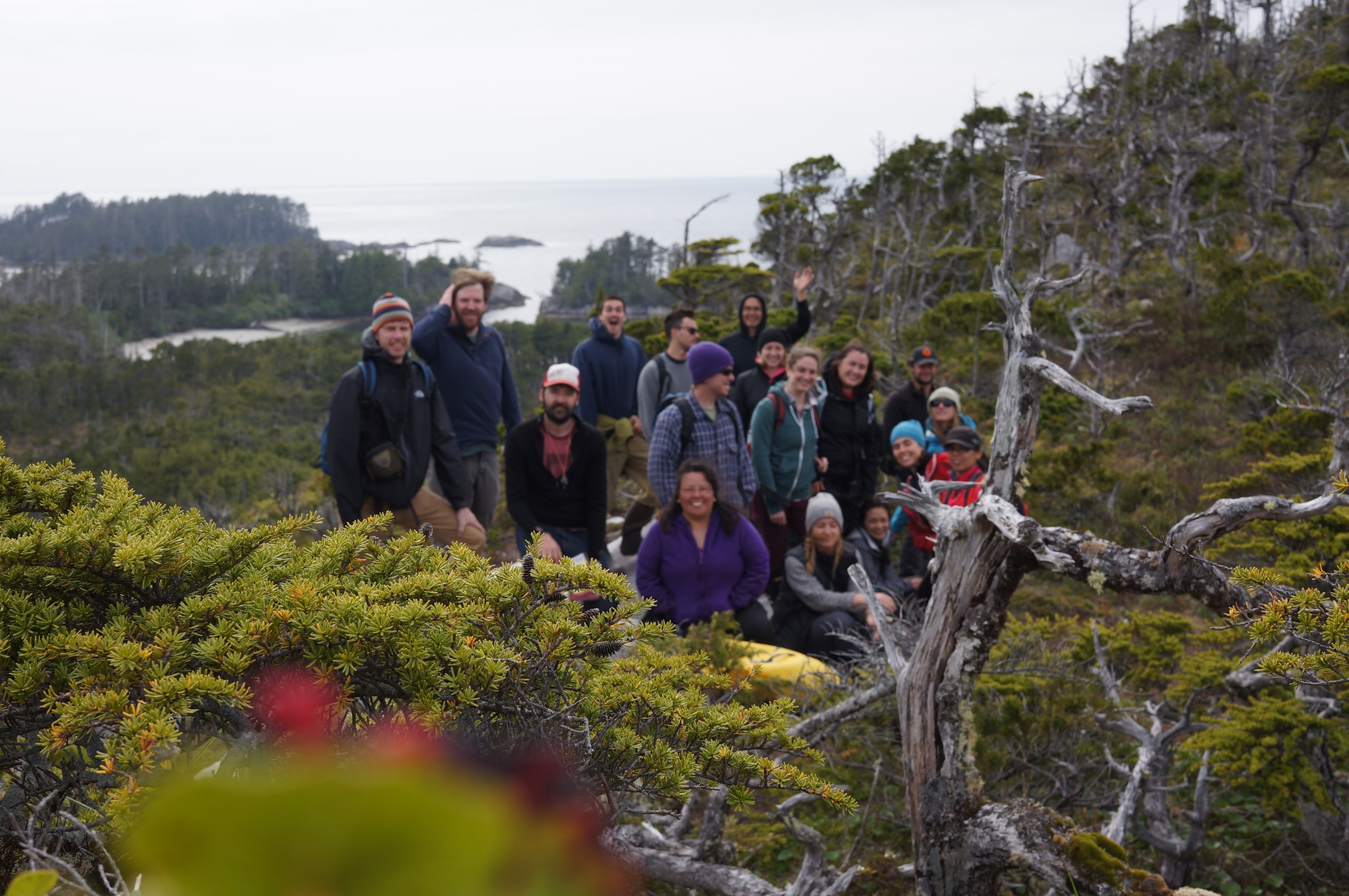
In 2014, I was fortunate to co-teach a 2-week graduate level course on Ecology and Archaeology on the Central British Columbia Coast at the Hakai Institute’s Calvert Island Field Station, an amazing marine research facility where students and guest lecturers read, discussed, and ventured about on boat-based fieldtrips to learn from Indigenous knowledge holders and Hakai Institute affiliated researchers. To read student reflections about this course please visit this page [.pdf download].
 HECA Lab @UVic
You must be logged in to post a comment.